Research & Projects
Customer Segmentation for E-commerce Businesses using K-means Clustering
In this project, customer segmentation was done on an e-commerce business dataset to identify customer habits. The project identifies customer segmentation approaches by analyzing the data. It aims to segment customers based on their spending habits, their online activity, their online presence and their location. Afterwards, marketing strategies were created to assist businesses in creating marketing campaigns exclusively for each segment of customers.

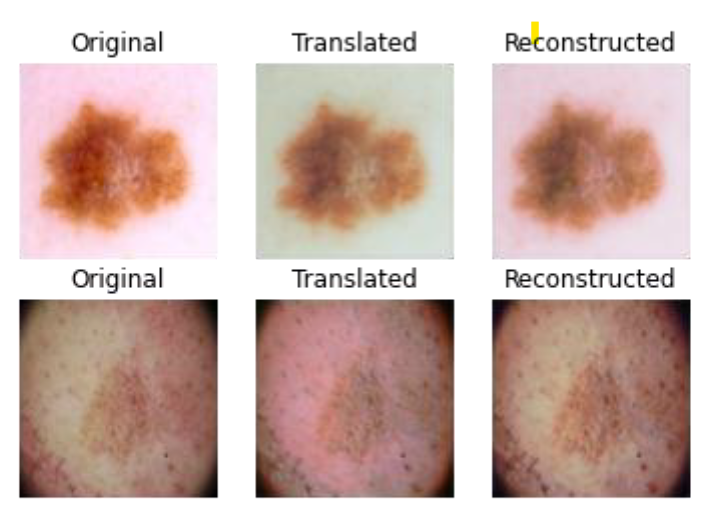
Medical Image Synthesis for Imbalanced Datasets Using CycleGan Under Label Noise
Class imbalance issue in medical image datasets is a common issue that makes it difficult to train machine learning models for image classification with great performance. This project involved synthesizing medical images to balance an imbalanced dataset using CycleGAN and PathGAN.
Secure and Reliable 5G Network Slicing in 5G Network using Deep Learning
This research assess the reliability of a machine learning model for network slicing known as DeepSlice. This model will implement a neural network to manage network load efficiency and network availability and predict the resource demand for a class of users. Another machine learning model, namely Secure 5G, will be ensembled with DeepSlice to detect and remove threats based on undesired connection requests detected from data. This model can serve network operators to sell network slicing as a service with high reliability and security

Investigation of Innovation Dynamics along the Life Cycle of Deep Learning
Traditional artificial intelligence milestones have evolved over decades into specialized subfields like deep learning, fundamentally reshaping modern technology and industries. This research investigates the dynamic life cycle of deep learning from its foundational conceptualization, examining how underlying technological cores have been continuously reinvented. By analyzing the application of deep learning algorithms in natural language processing and image recognition, the study evaluates the processes of reinvention and renovation across products and businesses. Furthermore, it explores the disruptive effects of deep learning through creative destruction, alongside the strategic policies and regulatory frameworks required to manage its economic impact on employment and firm growth.
Keywords
Deep learning, natural language processing, engineering technology management, artificial intelligence, face recognition
Content Based Image Retrieval System (CBIR) using RGB and HSV Histograms
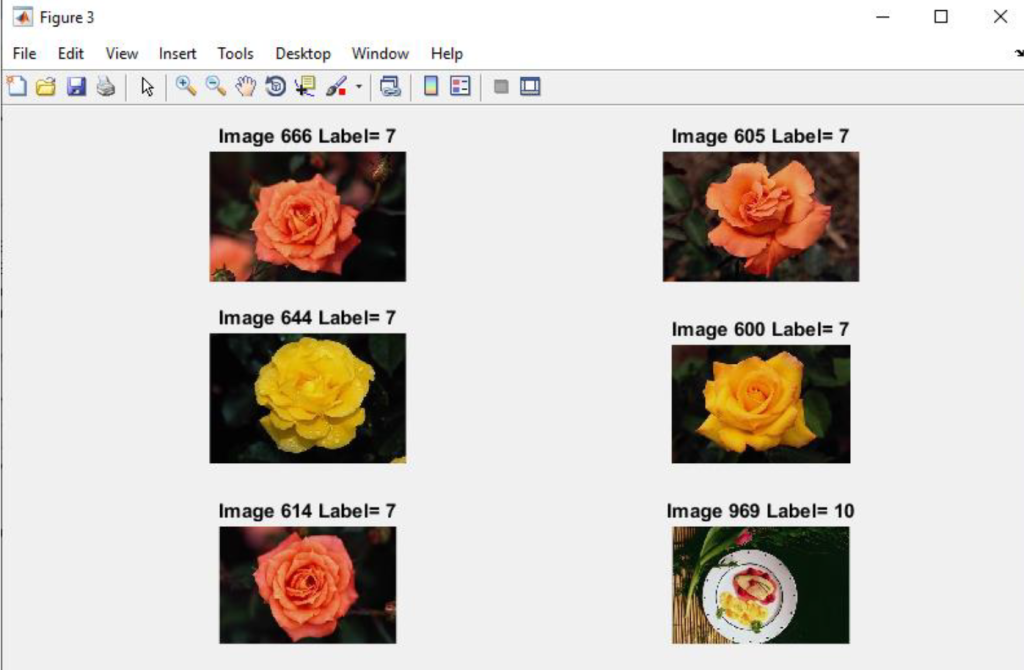
The aim of this paper is to investigate the feasibility of content based image retrieval (CBIR) by using 4 approaches. The first two approaches are histogram based: RGB (Red, Green, Blue) and HSV (Hue, Saturation, Value). The second two approaches are quantitative image fidelity measurement based: MSE (Mean Square Error) and SSIM (Structural Similarity Index). Quantitative image fidelity based measurement provides a certain amount similarity between two images. Lastly the precision rate for each image retrieval has been measured.
IOT Based Intelligent , Motorized Clothes Dryer System
A smart clothes drying rack was built from scratch to automate natural clothes drying process. The rack was designed as a wardrobe with wheels and a collision detection system. It was designed to detect sunlight and optimally position itself to speed up natural drying process within a bounded region. The system had a rain detection sensor which triggered side panels to open and close to protect the clothes from the rain. The wardrobe was connected to the internet to remotely control it using a simple android app.
Outdoor Mobile Autonomous Robotic Assistant
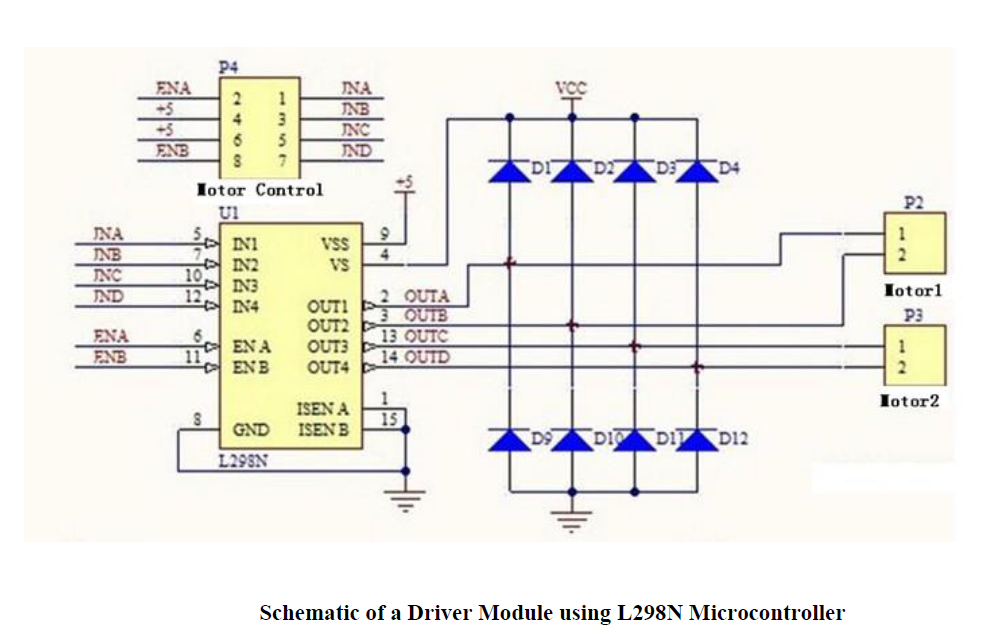
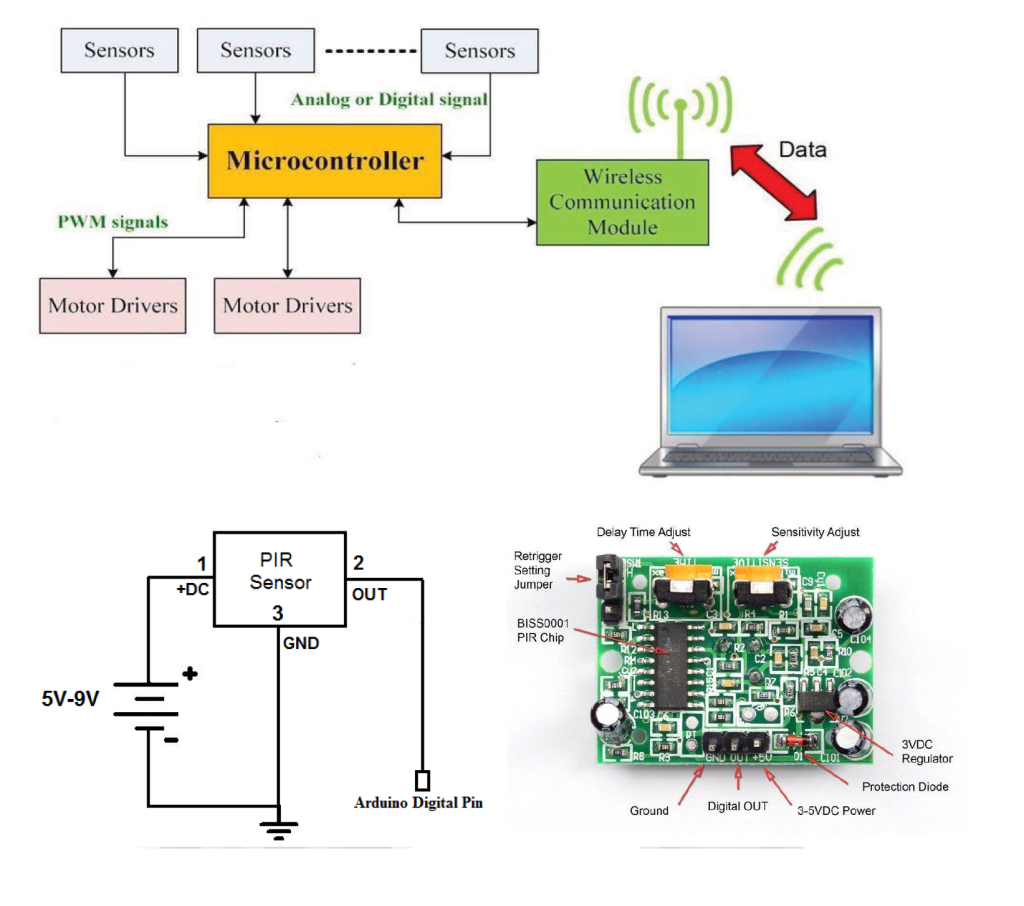
All the sensors and motors are integrated using an Arduino UNO. Arduino UNO is based on ATmega328 microcontroller and contains 14 digital I/O, 6 analog inputs, 32KB flash memory, 2KB SRAM, 1KB EEPROM and performs at 16MHz clock speed. It has two Vcc ports which provides 5V at 100mA and 3.3v at 50mA. The Arduino itself is connected to a 12V lithium polymer battery which is regulated to supply 5V to the Arduino. Arduino IDE 1.6.9 was used to write and burn the code, C++ language, onto the board.
Smart Streetlight Management System
The system enables city infrastructure managers to monitor asset locations, track operational statuses, manage maintenance histories, and evaluate energy usage. To investigate optimal data storage for smart city architectures, the system is implemented independently using two distinct NoSQL database technologies: MongoDB for document-oriented historical record storage and analytical aggregation, and Redis for in-memory key-value operational speed and rapid maintenance response. A performance evaluation benchmarking insertion, retrieval, and update times demonstrates the distinct operational advantages of each database model in handling real-time urban IoT data.

Givespace: Non-monetary Resource Donation Web Application Platform
Traditional in-person charitable donation processes often suffer from inefficiencies, inappropriate item distribution, and a lack of transparency between donors and recipients. Givespace is a MERN-stack, RESTful API-driven web application platform designed to streamline the peer-to-peer exchange of physical, non-monetary resources. Aligned with United Nations Sustainable Development Goals 1 (No Poverty) and 10 (Reduced Inequalities), the platform features role-based access control (RBAC) supporting Donors, Receivers, and Administrators. Built with a React frontend, Express/Node.js backend, and MongoDB document database, Givespace provides a secure, centralized digital space that fosters community-driven sustainability and trust.